
Sustainable Tourism and Responsible Hospitality: Future Directions for Academic Research
Sustainable Tourism and Responsible Hospitality: Future Directions for Academic Research in 2026
The global hospitality and tourism industry is undergoing a profound transformation. Climate change, environmental concerns, changing traveler expectations, and increasing social responsibility are reshaping the way tourism destinations, hotels, restaurants, and hospitality businesses operate.
Sustainability is no longer simply a business trend or marketing strategy. It has become a critical component of long-term competitiveness, destination resilience, and responsible business management. Travelers increasingly prefer businesses that demonstrate environmental stewardship, ethical practices, and community engagement.
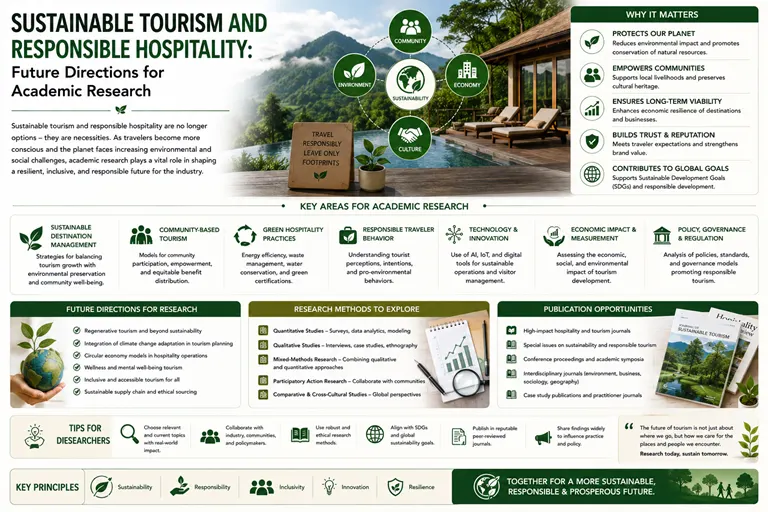
For researchers and scholars, this transformation presents numerous opportunities for impactful and interdisciplinary research. Sustainable tourism and responsible hospitality have emerged as major areas of academic inquiry, requiring evidence-based studies that can guide industry practices and public policy.
At Re-IMAGINE The Journal for Hospitality, Tourism & Culinary Professionals, we recognize the importance of research that contributes to creating a more sustainable, inclusive, and resilient hospitality industry.
Understanding Sustainable Tourism and Responsible Hospitality
Sustainable tourism refers to tourism practices that consider their current and future economic, social, and environmental impacts while addressing the needs of visitors, industry stakeholders, local communities, and the environment.
Responsible hospitality extends this concept by focusing on ethical business operations that promote:
- Environmental conservation
- Community development
- Cultural preservation
- Social inclusion
- Economic sustainability
- Responsible consumption and production
The future of hospitality depends on balancing economic growth with environmental responsibility and social well-being.
Why Sustainability Has Become a Major Research Priority
Several global developments have accelerated interest in sustainable hospitality and tourism research:
- Climate change and environmental degradation
- Resource scarcity and waste management concerns
- Increased consumer awareness
- Demand for ethical tourism experiences
- Sustainable Development Goals initiatives
- Government sustainability regulations
- Corporate social responsibility commitments
These developments have created an urgent need for academic research that can provide practical and evidence-based solutions.
Sustainable Destination Management
Tourism destinations around the world are seeking ways to balance visitor growth with environmental and social sustainability.
Key concerns include:
- Overtourism
- Environmental degradation
- Infrastructure pressure
- Cultural commodification
- Community displacement
Emerging Research Opportunities
- Sustainable destination governance models
- Carrying capacity assessment techniques
- Community-based tourism development
- Destination resilience strategies
- Policy frameworks for sustainable tourism
- Stakeholder participation in tourism planning
Future Research Direction
Researchers can explore how destinations can achieve long-term sustainability while maintaining economic benefits and protecting local communities.
Green Hotels and Sustainable Accommodation Management
Hotels are increasingly adopting environmentally responsible business practices.
Common initiatives include:
- Energy-efficient technologies
- Water conservation programs
- Renewable energy adoption
- Sustainable procurement policies
- Waste reduction strategies
- Green building certifications
Potential Research Topics
- Green hotel performance indicators
- Guest perceptions of sustainable hotels
- Environmental certification effectiveness
- Sustainable procurement practices
- Carbon footprint reduction strategies
- Sustainability reporting in hospitality organizations
Research in this area can help hospitality organizations better understand the economic and operational benefits of sustainability initiatives.
Responsible Food Systems and Sustainable Culinary Practices
The food and beverage sector has become an important contributor to sustainability efforts.
Hospitality businesses are increasingly focusing on:
- Local food sourcing
- Farm-to-table concepts
- Organic ingredients
- Food waste reduction
- Ethical supply chains
- Sustainable menu development
Research Opportunities
- Consumer acceptance of sustainable food practices
- Food waste management in hospitality operations
- Sustainable restaurant business models
- Local sourcing and destination branding
- Ethical food consumption behavior
- Sustainable culinary entrepreneurship
This area offers considerable opportunities for interdisciplinary collaboration between hospitality, food science, and environmental researchers.
Community-Based Tourism and Social Responsibility
Community participation has become essential for sustainable tourism development.
Responsible tourism aims to ensure that local communities benefit economically and socially from tourism activities.
Potential Research Topics
- Community participation in tourism planning
- Social impacts of tourism development
- Indigenous tourism initiatives
- Rural tourism development strategies
- Local entrepreneurship and tourism
- Community resilience and tourism recovery
Academic Importance
Research in community-based tourism contributes to equitable and inclusive tourism development that benefits local populations.
Circular Economy in Hospitality and Tourism
The circular economy concept is gaining significant attention in hospitality management.
It focuses on minimizing waste and maximizing resource efficiency through:
- Recycling
- Reuse
- Regeneration
- Sustainable production systems
Emerging Research Areas
- Circular business models in hospitality
- Resource efficiency strategies
- Waste management innovations
- Sustainable supply chain management
- Circular economy performance indicators
- Consumer perceptions of circular practices
The hospitality industry has considerable potential to adopt circular economy principles that reduce environmental impact while improving operational efficiency.
Climate Change and Tourism Resilience
Climate change poses substantial risks to tourism destinations and hospitality businesses.
Extreme weather events, changing ecosystems, and resource limitations are increasingly affecting tourism operations worldwide.
Research Opportunities
- Climate adaptation strategies for tourism destinations
- Disaster risk management in hospitality
- Tourism resilience frameworks
- Climate vulnerability assessments
- Sustainable infrastructure planning
- Environmental risk management
Future studies can help organizations and destinations become more resilient and better prepared for environmental challenges.
Sustainable Technology and Smart Hospitality
Digital technologies are supporting sustainability initiatives across the hospitality industry.
Examples include:
- Smart energy systems
- Digital resource management
- Artificial intelligence for operational optimization
- Smart waste management
- Environmental monitoring technologies
Research Topics
- Technology-enabled sustainability practices
- Smart hotels and environmental performance
- Artificial intelligence and resource optimization
- Digital transformation and sustainability
- Technology acceptance in green hospitality
Researchers can examine how emerging technologies contribute to both environmental sustainability and business performance.
Sustainable Tourism Consumer Behaviour
Consumer attitudes and behaviors are major drivers of sustainable tourism practices.
Modern travelers increasingly seek:
- Eco-friendly accommodations
- Ethical tourism experiences
- Authentic local experiences
- Sustainable food options
- Low-carbon travel alternatives
Research Opportunities
- Sustainable travel decision-making
- Consumer willingness to pay for green services
- Eco-label influence on purchasing behavior
- Responsible tourist behavior
- Sustainable consumption patterns
Understanding consumer preferences can help businesses design more effective sustainability strategies.
Hospitality Education for Sustainable Development
Educational institutions play an important role in preparing future hospitality professionals.
There is increasing demand for:
- Sustainability education
- Environmental management training
- Responsible leadership development
- Ethics in hospitality management
- Green entrepreneurship education
Potential Research Topics
- Sustainability competencies in hospitality education
- Curriculum innovation for sustainable tourism
- Industry-academia collaboration
- Experiential sustainability learning
- Student perceptions of sustainability education
Research in this area can significantly contribute to developing a future-ready hospitality workforce.
Interdisciplinary Research Opportunities
Sustainable tourism research is inherently interdisciplinary and may involve:
- Hospitality Management
- Tourism Studies
- Environmental Science
- Economics
- Sociology
- Geography
- Food Science
- Public Policy
- Technology Management
- Education Studies
Interdisciplinary research can generate innovative solutions to complex sustainability challenges that cannot be addressed through a single discipline alone.
Why Academic Research Matters for Sustainable Hospitality
The hospitality and tourism industry requires evidence-based solutions to address environmental, social, and economic challenges.
High-quality academic research can:
- Support policy development
- Improve business practices
- Encourage responsible consumption
- Strengthen community engagement
- Promote environmental stewardship
- Advance sustainable innovation
Scholarly publications play a critical role in disseminating knowledge and shaping the future of responsible hospitality.
Publishing Research on Sustainable Tourism and Hospitality
Researchers working in sustainable tourism, hospitality management, culinary sustainability, and related disciplines are encouraged to contribute original research that advances knowledge and industry practices.
Re-IMAGINE The Journal for Hospitality, Tourism & Culinary Professionals welcomes submissions related to:
- Sustainable Tourism
- Responsible Hospitality
- Green Hotel Management
- Sustainable Culinary Practices
- Community-Based Tourism
- Climate Change and Tourism
- Circular Economy in Hospitality
- Tourism Policy and Governance
- Sustainable Consumer Behaviour
- Hospitality Education and Sustainability
Frequently Asked Questions
Why is sustainable tourism an important research area?
Sustainable tourism helps balance economic development with environmental protection and social well-being, making it one of the most significant areas of contemporary tourism research.
What are the major themes in responsible hospitality research?
Major themes include green hotels, sustainable food systems, community development, climate resilience, circular economy practices, and responsible consumer behavior.
Can interdisciplinary sustainability studies be published in hospitality journals?
Yes. Interdisciplinary research is increasingly encouraged because sustainability challenges require solutions from multiple fields of study.
What are some emerging research opportunities in sustainable hospitality?
Climate adaptation, smart sustainability technologies, responsible food systems, and circular economy practices are among the most promising research areas.
Why is community-based tourism important?
Community-based tourism ensures that local populations benefit economically and socially while protecting cultural heritage and environmental resources.
Conclusion
Sustainable tourism and responsible hospitality are no longer niche areas of academic interest. They have become central themes that will define the future of global tourism and hospitality management.
The challenges of climate change, environmental sustainability, resource management, and social responsibility require innovative research and evidence-based solutions. For scholars, educators, and industry professionals, this presents unprecedented opportunities to contribute meaningful knowledge that can shape policy, improve business practices, and support sustainable development.
As a platform dedicated to advancing hospitality, tourism, and culinary scholarship, Re-IMAGINE The Journal for Hospitality, Tourism & Culinary Professionals encourages researchers to explore these emerging themes and contribute to building a more sustainable and responsible hospitality industry.