
Emerging Hospitality and Culinary Trends: Research Opportunities for Scholars in 2026
Emerging Hospitality and Culinary Trends in 2026: Research Opportunities for Scholars and Industry Professionals
The global hospitality, tourism, and culinary sectors are experiencing one of the most transformative periods in their history. Rapid technological advancements, changing consumer preferences, sustainability concerns, health-conscious dining habits, and digital innovation are reshaping how hospitality businesses operate and how culinary experiences are designed.
For academic researchers and industry professionals, these changes present significant opportunities to generate new knowledge, develop practical solutions, and contribute to the future of hospitality and culinary education.
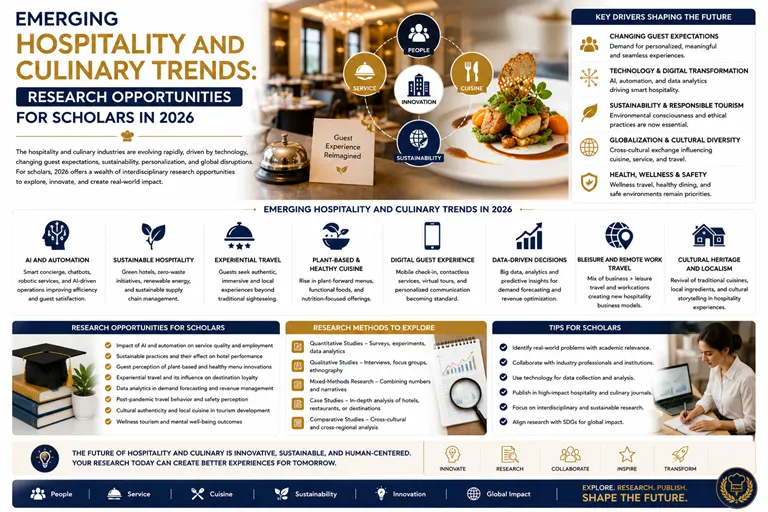
At Re-IMAGINE The Journal for Hospitality, Tourism & Culinary Professionals, we believe that scholarly research plays a critical role in helping the hospitality and tourism industry adapt to emerging challenges and opportunities. As the industry evolves, researchers have a unique opportunity to explore innovative topics that can influence policy, education, business strategy, and consumer experiences.
This article explores the most important hospitality and culinary trends in 2026 and highlights promising research directions for scholars, educators, and practitioners.
The Changing Landscape of Hospitality and Culinary Industries
The hospitality sector has traditionally been driven by service excellence and customer satisfaction. However, the modern hospitality ecosystem is increasingly influenced by:
- Digital technologies
- Artificial Intelligence
- Sustainability initiatives
- Culinary innovation
- Experience-based tourism
- Data-driven decision-making
- Health and wellness trends
- Cultural and heritage tourism
These developments have created new areas for interdisciplinary research that combine management, technology, tourism studies, consumer psychology, sustainability, and food sciences.
1. Sustainable Hospitality and Responsible Tourism
Sustainability is no longer an optional business strategy. It has become a central component of hospitality management and tourism planning.
Hotels, restaurants, and tourism destinations are increasingly focusing on:
- Carbon footprint reduction
- Energy-efficient operations
- Sustainable food sourcing
- Waste management
- Water conservation
- Ethical tourism practices
Potential Research Topics
- Sustainable hotel management practices
- Green certification and business performance
- Eco-friendly culinary operations
- Consumer perceptions of sustainable tourism
- Circular economy in hospitality businesses
- Sustainable destination management models
Why This Area Matters
Modern travelers increasingly prefer environmentally responsible businesses. Understanding the economic and social implications of sustainability initiatives can help organizations make informed strategic decisions.
2. Artificial Intelligence and Digital Transformation in Hospitality
Artificial Intelligence is transforming nearly every aspect of hospitality operations.
Hotels and restaurants are adopting:
- AI-powered customer service
- Smart room technologies
- Automated reservation systems
- Predictive analytics
- Chatbots and virtual assistants
- Revenue optimization systems
Digital transformation has also changed customer expectations regarding convenience, personalization, and service delivery.
Research Opportunities
- AI adoption in hotel management
- Customer acceptance of service automation
- Digital transformation and employee performance
- Smart hospitality technologies
- Data analytics in tourism management
- Technology acceptance models in hospitality
Future Research Direction
Researchers can investigate how technology improves operational efficiency while maintaining the human-centered nature of hospitality services.
3. Culinary Innovation and Gastronomy Research
Food experiences have become a major driver of tourism worldwide.
Travelers increasingly seek:
- Authentic culinary experiences
- Regional food heritage
- Experiential dining
- Fusion cuisine
- Indigenous food traditions
- Culinary storytelling
This has elevated gastronomy from a service component to a major area of academic research.
Emerging Research Topics
- Culinary tourism and destination branding
- Preservation of traditional cuisines
- Food heritage and cultural identity
- Consumer behavior in experiential dining
- Gastronomy entrepreneurship
- Innovation in restaurant concepts
Importance for Researchers
Gastronomy research contributes to cultural preservation while creating opportunities for tourism development and local economic growth.
4. Health, Wellness, and Functional Foods
Health-conscious consumers are reshaping the food service industry.
Restaurants and hospitality businesses increasingly offer:
- Functional foods
- Plant-based menus
- Organic ingredients
- Nutritional transparency
- Wellness tourism experiences
Research Possibilities
- Consumer acceptance of plant-based cuisine
- Wellness tourism trends
- Nutritional behavior among travelers
- Functional foods in hospitality settings
- Food safety and consumer trust
This research area combines hospitality management, nutrition science, and consumer behavior.
5. Experience Economy and Personalised Guest Services
Modern consumers increasingly seek memorable experiences rather than standardized services.
The concept of the experience economy has transformed:
- Hotel design
- Restaurant concepts
- Tourism products
- Event management
- Customer engagement strategies
Potential Research Topics
- Experience-based hospitality models
- Personalization and customer satisfaction
- Emotional intelligence in service delivery
- Guest experience management
- Digital personalization in hospitality
Academic Significance
Research in this area can help organizations create differentiated service strategies and improve customer loyalty.
6. Cultural Heritage and Culinary Tourism
Food has become an important component of cultural tourism.
Destinations are increasingly promoting:
- Regional cuisine
- Indigenous food traditions
- Culinary festivals
- Heritage food experiences
- Local food entrepreneurship
Research Opportunities
- Culinary tourism destination development
- Heritage food preservation
- Food festivals and local economies
- Gastronomic identity and tourism
- Community participation in culinary tourism
This research area offers substantial opportunities for interdisciplinary collaboration between tourism scholars, anthropologists, and hospitality professionals.
7. Hospitality Workforce Transformation
The hospitality workforce has undergone considerable change in recent years.
Key challenges include:
- Talent shortages
- Employee retention
- Skill development
- Digital competencies
- Mental health and well-being
- Leadership development
Research Topics
- Future skills in hospitality management
- Employee engagement strategies
- Hospitality education and industry readiness
- Workforce diversity and inclusion
- Leadership in hospitality organizations
- Employee well-being and performance
Research in human resource development remains critical to the industry's long-term sustainability.
8. Smart Tourism and Destination Management
Technology has revolutionized how travelers plan and experience their journeys.
Emerging technologies include:
- Mobile applications
- Big data analytics
- Augmented reality
- Virtual reality
- Smart destination management systems
Research Opportunities
- Smart tourism adoption
- Digital destination experiences
- Tourist behavior analytics
- Technology-enabled tourism management
- Smart city tourism models
9. Entrepreneurship and Innovation in Hospitality
Hospitality entrepreneurship is becoming increasingly important due to changing market conditions and evolving consumer demands.
Emerging Research Areas
- Hospitality startups
- Cloud kitchens
- Culinary entrepreneurship
- Digital food businesses
- Social entrepreneurship in tourism
- Innovation ecosystems in hospitality
Entrepreneurship research can contribute significantly to economic development and employment generation.
10. Hospitality Education and Curriculum Innovation
Educational institutions are adapting their curricula to meet changing industry demands.
Important areas include:
- Technology integration
- Experiential learning
- Industry-academia partnerships
- Competency-based education
- Sustainability education
- Culinary innovation training
Potential Research Topics
- Future-ready hospitality education
- Curriculum redesign in culinary education
- Digital learning in hospitality programs
- Industry expectations from graduates
- Internship effectiveness
Why These Trends Matter for Academic Publishing
The hospitality and culinary industries are evolving rapidly, creating an urgent need for evidence-based research and practical solutions.
Academic journals play an important role in:
- Disseminating new knowledge
- Encouraging interdisciplinary collaboration
- Supporting evidence-based decision-making
- Promoting innovation and sustainability
- Bridging the gap between academia and industry
Emerging research areas offer scholars significant opportunities to publish impactful studies that can shape the future of hospitality, tourism, and culinary professions.
Publishing Your Hospitality Research
Researchers working in hospitality, tourism, culinary sciences, gastronomy, and related disciplines are encouraged to contribute original research, review articles, case studies, and innovative industry practices.
Re-IMAGINE The Journal for Hospitality, Tourism & Culinary Professionals welcomes scholarly contributions that address emerging challenges and opportunities in:
- Hospitality Management
- Tourism Studies
- Culinary Arts
- Gastronomy
- Sustainable Hospitality
- Hospitality Technology
- Service Innovation
- Tourism Entrepreneurship
- Hospitality Education
- Food and Beverage Management
Frequently Asked Questions
What are the most important hospitality research trends in 2026?
The most significant trends include sustainability, artificial intelligence, culinary tourism, wellness tourism, smart tourism, and experience-based hospitality.
Is culinary tourism an emerging research field?
Yes. Culinary tourism has become one of the fastest-growing research areas due to increasing consumer interest in food experiences and cultural heritage.
Can interdisciplinary studies be published in hospitality journals?
Absolutely. Studies combining management, technology, tourism, sustainability, psychology, and food sciences are increasingly valuable.
Why is sustainability important in hospitality research?
Sustainability influences consumer behavior, operational efficiency, environmental responsibility, and long-term business competitiveness.
What type of manuscripts can researchers submit?
Researchers may submit original research articles, review papers, case studies, short communications, and industry perspectives.
Conclusion
The hospitality, tourism, and culinary sectors are entering an exciting era of transformation. Sustainability, digital innovation, culinary entrepreneurship, wellness, and experiential travel are creating unprecedented opportunities for academic inquiry and professional practice.
For researchers and practitioners, these emerging trends provide fertile ground for producing impactful scholarship that can contribute to industry development, policy formation, and educational advancement.
As an emerging scholarly platform dedicated to hospitality, tourism, and culinary professionals, Re-IMAGINE The Journal for Hospitality, Tourism & Culinary Professionals aims to encourage high-quality research that addresses the evolving needs of the global hospitality ecosystem.
Researchers, educators, and industry experts are invited to contribute their insights and participate in shaping the future of hospitality and culinary scholarship through rigorous, innovative, and interdisciplinary research.