
Digital Transformation in Hospitality: AI, Guest Experience, and Research Opportunities
Digital Transformation in Hospitality: AI, Guest Experience, and Research Opportunities in 2026
The hospitality and tourism industry has entered a new era of digital transformation. From artificial intelligence and smart hotel technologies to data-driven personalization and contactless services, digital innovation is fundamentally changing how hospitality businesses operate and how guests experience travel.
Today's travelers are increasingly technology-driven. They expect personalized recommendations, seamless booking experiences, fast service delivery, and digitally connected environments. At the same time, hospitality businesses are embracing advanced technologies to improve operational efficiency, enhance customer satisfaction, and remain competitive in an increasingly dynamic marketplace.
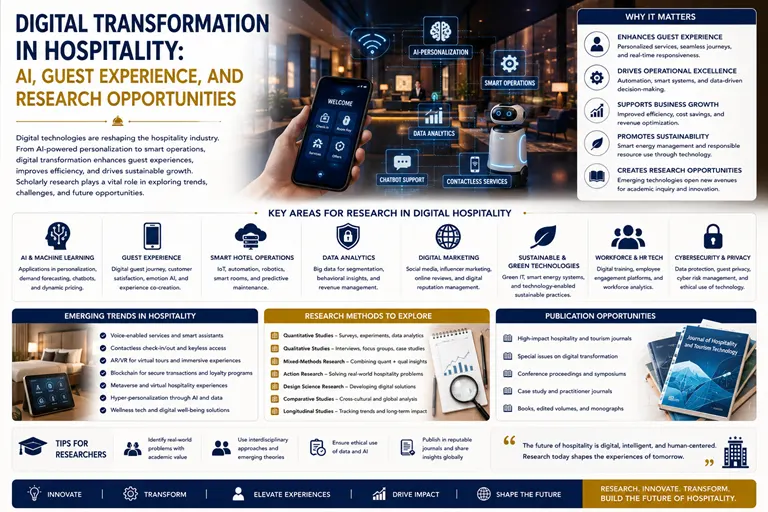
The rapid adoption of digital technologies has also opened numerous opportunities for academic research. Scholars now have unprecedented opportunities to investigate the impact of artificial intelligence, automation, and digital innovation on hospitality management, tourism experiences, and organizational performance.
At Re-IMAGINE The Journal for Hospitality, Tourism & Culinary Professionals, we recognize that research in hospitality technology and digital transformation will play an important role in shaping the future of global tourism and hospitality management.
Understanding Digital Transformation in Hospitality
Digital transformation refers to the integration of digital technologies into all aspects of hospitality operations and customer experiences. It goes beyond simply adopting new technologies and involves a fundamental change in how organizations create value and interact with guests.
Digital transformation in hospitality encompasses:
- Artificial intelligence applications
- Smart hotel technologies
- Data analytics and business intelligence
- Mobile applications and digital platforms
- Contactless services
- Customer relationship management systems
- Cloud-based management systems
- Internet of Things technologies
- Automation and robotics
- Digital marketing and social media strategies
The transformation is reshaping both front-end guest experiences and back-end operational processes.
Why Digital Transformation Matters in Hospitality
The hospitality industry faces increasing competition, changing customer expectations, and growing demands for efficiency and personalization.
Digital technologies help organizations:
- Improve guest satisfaction
- Enhance operational efficiency
- Reduce costs
- Increase revenue opportunities
- Strengthen customer loyalty
- Improve decision-making
- Create innovative service experiences
For researchers, understanding the implications of these technologies is essential for developing evidence-based strategies that benefit both businesses and consumers.
Artificial Intelligence in Hospitality Management
Artificial intelligence has become one of the most influential technologies in the hospitality sector.
Hotels, restaurants, and tourism businesses are increasingly using AI for:
- Chatbots and virtual assistants
- Personalized recommendations
- Dynamic pricing strategies
- Demand forecasting
- Customer sentiment analysis
- Automated customer service
- Revenue management systems
- Predictive analytics
Emerging Research Opportunities
- AI adoption in hospitality organizations
- Customer acceptance of AI services
- Artificial intelligence and service quality
- Ethical implications of AI in hospitality
- AI-driven decision-making processes
- Employee perceptions of artificial intelligence
Future Research Direction
Researchers can investigate how artificial intelligence influences customer satisfaction, organizational performance, and employee engagement.
Smart Hotels and Intelligent Hospitality Systems
The concept of smart hotels has gained considerable momentum in recent years.
Smart hotel technologies include:
- Mobile check-in and check-out systems
- Smart room controls
- Voice-activated services
- Facial recognition technologies
- Digital concierge services
- Automated energy management systems
- Internet of Things devices
Potential Research Topics
- Guest acceptance of smart technologies
- Smart hotel adoption models
- Technology and service personalization
- Smart hotel operational efficiency
- Privacy concerns in smart hospitality
- Digital service quality assessment
Research in this area can help organizations balance technological innovation with customer trust and satisfaction.
Guest Experience and Personalisation Through Technology
Modern travelers increasingly expect personalized and seamless experiences.
Technology enables hospitality businesses to provide:
- Customized travel recommendations
- Personalized room preferences
- Tailored dining experiences
- Individualized marketing communications
- Real-time customer support
Research Opportunities
- Personalization and customer satisfaction
- Customer experience management
- Technology-enabled service innovation
- Consumer perceptions of digital experiences
- Loyalty and personalized services
- Customer journey analytics
Understanding how technology shapes guest experiences remains one of the most important areas of hospitality research.
Big Data and Business Intelligence in Hospitality
The hospitality industry generates vast amounts of data through:
- Booking systems
- Online reviews
- Customer feedback
- Social media interactions
- Loyalty programs
- Mobile applications
Big data analytics enables organizations to gain insights into customer behavior and operational performance.
Potential Research Areas
- Data-driven decision-making
- Predictive analytics in hospitality
- Consumer behavior analytics
- Online review analysis
- Business intelligence adoption
- Revenue optimization through analytics
Contactless Services and Digital Customer Engagement
The demand for convenience and efficiency has accelerated the adoption of contactless technologies.
Examples include:
- Mobile payments
- Self-service kiosks
- Digital menus
- QR code-based services
- Online check-in systems
- Mobile room keys
Research Opportunities
- Consumer acceptance of contactless services
- Service quality in digital environments
- Contactless technologies and customer satisfaction
- Digital trust and security perceptions
- Adoption barriers in hospitality technologies
Artificial Intelligence and Revenue Management
Revenue management has become increasingly sophisticated through AI-powered tools.
Technologies now assist with:
- Demand forecasting
- Dynamic pricing
- Market segmentation
- Inventory optimization
- Competitor analysis
Research Topics
- AI-driven revenue management strategies
- Dynamic pricing effectiveness
- Predictive demand models
- Revenue optimization technologies
- Strategic decision-making through analytics
This field provides considerable opportunities for quantitative and applied research.
Digital Marketing and Social Media in Hospitality
Digital platforms have transformed how hospitality organizations communicate with consumers.
Key digital channels include:
- Social media platforms
- Online travel agencies
- Influencer marketing
- Content marketing
- Search engine optimization
- Mobile marketing
Research Opportunities
- Consumer behavior on digital platforms
- Social media influence on travel decisions
- Online reputation management
- Digital brand engagement
- Influencer marketing effectiveness
Technology and Hospitality Workforce Transformation
Digital transformation is changing the skills required in the hospitality industry.
Organizations increasingly seek professionals with competencies in:
- Data analytics
- Artificial intelligence
- Digital communication
- Technology management
- Customer experience design
- Innovation management
Potential Research Topics
- Future workforce competencies
- Employee adaptation to technology
- Digital leadership in hospitality
- Technology training and education
- Organizational change management
Ethics, Privacy, and Responsible Technology Adoption
As digital technologies become more sophisticated, ethical considerations are becoming increasingly important.
Issues include:
- Data privacy
- Cybersecurity
- Algorithmic bias
- Consumer trust
- Responsible use of artificial intelligence
Emerging Research Areas
- Ethics of AI in hospitality
- Privacy concerns in smart hotels
- Responsible data management
- Consumer trust in digital services
- Technology governance frameworks
Smart Tourism and Destination Innovation
Technology is also transforming tourism destinations.
Innovations include:
- Smart destination platforms
- Mobile tourism applications
- Augmented reality experiences
- Virtual tourism services
- Digital destination management systems
Research Opportunities
- Smart tourism adoption
- Destination competitiveness and technology
- Digital tourism experiences
- Technology-enabled destination management
- Visitor behavior in smart destinations
Hospitality Education and Digital Skills Development
Educational institutions are increasingly integrating technology into hospitality and tourism education.
Important areas include:
- Artificial intelligence education
- Digital hospitality management
- Technology-enabled learning
- Industry-academia collaboration
- Innovation and entrepreneurship education
Potential Research Topics
- Digital competencies in hospitality education
- Curriculum redesign for Industry 5.0
- Technology adoption in hospitality training
- Future skills for hospitality graduates
- Experiential technology learning
Interdisciplinary Research Opportunities
Digital transformation research intersects with multiple disciplines, including:
- Hospitality Management
- Tourism Studies
- Information Technology
- Business Analytics
- Consumer Psychology
- Marketing
- Human Resource Management
- Data Science
- Innovation Management
Interdisciplinary collaboration can generate valuable insights and practical solutions for complex industry challenges.
Why Digital Transformation Research Matters
The hospitality industry is becoming increasingly dependent on technology to deliver superior guest experiences and improve business performance.
Academic research can help:
- Identify best practices for technology adoption
- Improve digital service quality
- Enhance organizational efficiency
- Understand consumer expectations
- Develop responsible technology policies
- Support sustainable innovation
High-quality research enables industry stakeholders to make informed decisions in a rapidly evolving digital environment.
Publishing Research on Hospitality Technology and Innovation
Researchers working in hospitality technology, artificial intelligence, tourism innovation, and digital transformation are encouraged to contribute original studies that address contemporary industry challenges.
Re-IMAGINE The Journal for Hospitality, Tourism & Culinary Professionals welcomes submissions related to:
- Artificial Intelligence in Hospitality
- Smart Hotels and Smart Tourism
- Guest Experience Innovation
- Hospitality Analytics
- Digital Marketing and Tourism
- Technology Adoption in Hospitality
- Revenue Management Systems
- Contactless Service Technologies
- Hospitality Education and Technology
- Innovation and Entrepreneurship in Tourism
Frequently Asked Questions
Why is digital transformation important in hospitality?
Digital transformation helps hospitality organizations improve operational efficiency, enhance customer experiences, and remain competitive in an increasingly technology-driven market.
What are the major applications of artificial intelligence in hospitality?
AI applications include chatbots, predictive analytics, dynamic pricing, personalized recommendations, customer sentiment analysis, and revenue management systems.
What are smart hotels?
Smart hotels use advanced technologies such as IoT devices, mobile applications, voice assistants, and automated systems to improve guest experiences and operational efficiency.
What research opportunities exist in hospitality technology?
Research opportunities include AI adoption, digital guest experiences, smart tourism, contactless technologies, ethics of AI, and technology-enabled service innovation.
Why is guest experience research important?
Guest experience significantly influences customer satisfaction, loyalty, online reputation, and business performance.
Conclusion
Digital transformation is redefining the future of hospitality and tourism. Artificial intelligence, smart technologies, data analytics, and personalized guest experiences are no longer emerging concepts but essential components of modern hospitality management.
For researchers and industry professionals, this transformation presents significant opportunities to explore how technology influences consumer behavior, operational performance, and service innovation.
As the hospitality sector continues its digital evolution, rigorous academic research will be essential in developing evidence-based strategies that help organizations embrace innovation responsibly and effectively.
Re-IMAGINE The Journal for Hospitality, Tourism & Culinary Professionals encourages scholars, educators, and practitioners to contribute meaningful research that advances understanding of digital transformation and its impact on hospitality and tourism.